When using language to learn about a culture or the other way around, students understand better the world as a whole, and at the same time distinguish particularities of their own, and others. Teaching culture through language suspends the traditional dichotomy between the universal and the particular in language teaching. It embraces the particular, not to be consumed by it, but as a platform for dialogue and as a common struggle to realign differences.

POW TOON
https://www.youtube.com/watch?v=V9ykEG6PAag&rel=0
https://www.youtube.com/watch?v=9Se-zZyIC7o
ºTopic of the interview:
Teaching Culture.
ºDate and time it is performed:
26 June, 2019
ºPlace where it is performed:
Universidad del Tolima.
ºInterviewed name:
Jhon Cujiño.
ºProfession:
Teacher of English at the Tolima University and high school.
ºSummary of the answers and comments.
What do you think is the relationship between language and culture?
John: Well as you told before, language and culture The relation of culture and language is the way they share human values, realities and behaviors of a social group. The structure of a language determines the way in which speakers of that language view the world or, as a weaker view, the structure does not determine the world-view but is still extremely influential in predisposing speakers of a language toward adopting their world-view The culture of a people finds reflection in the language they employ: because they value certain things and do them in a certain way, they come to use their language in ways that reflect what they value and what they do.
What is the influence of culture in the process of a foreign language process?
Jhon : Well as you told before language and culture have an importance influence…special we are infants, we acquire our first language in a natural way because our society, our environment, and our culture continually feed us. Similarly, when we acquire a new language, cultural perception and intercultural training is very important. If children are given cultural knowledge, immersed in a culturally rich environment, and exposed to culturally basic material, they may learn the second language with more ease because their background knowledge about the second-language culture will make comprehension less difficult, culture has a great influence in our learning process.
Which cultural expressions do you know countries have through language?
Jhon: well the most important pars that each place has his own expressions, for example in Ireland you can hear the expression “skin a cat “You could skin a cat out there This expression is used to show that it is very cold outside! Well in America one more expression like piece of cake that’s means when something is really, really easy.
Why do you think is it important to have an oral tradition in a country?
Jhon: Because oral tradition refers to a dynamic and highly diverse oral medium for evolving, storing, and transmitting knowledge, art, and ideas. It is typically contrasted with literacy, with which it can and does interact in myriad ways, and also with literature, which it dwarfs in size, diversity, and social function.
What do you think, do we teach language using culture or do we teach culture using language?
Jhon: well is very difficult split those concepts Language is the carrier and reflection of culture because both of them work together. Meanwhile culture would be difficult to be transmitted from place to place, if there were no language the principal carrier of meanings of culture, language would not have understood without a reference to the cultural context.
Do you take into account culture in the strategies you use in your English classes? Can you give me some examples?
Jhon: well absolutely here for example we small culture all around the school,we have an influence from different culture we must take into account. As a teacher we can easily find a subculture in the school is the classroom where one teacher’s preferences may not be shared by his/her colleagues. So …culture influences how lessons are presented and how instruction proceeds. It impacts how students learn. Culture has crucial ramifications for educators and the field of teaching.
Give your students time to work on projects as teams specially in this moments when we have a variety of cultures like Venezuelan sharing a classrooms giving opportunities to compare different traditions in the same classroom. – This allows students to hear about other cultures and see individuals who represent their particular culture.

Flag Adopted: 14 April 1954 In the upper hoist canton of the flag is the Union Flag. We can see 5 white stars, representing the Southern Cross, a constellation of stars generally only visible in the southern hemisphere. There is one point for each of the six original states, and one to represent all of Australia′s internal and external territories.
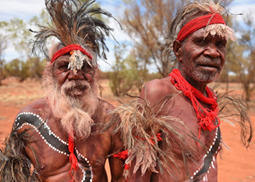
Indigenous Australians, are the original inhabitants of Australia. They migrated from Africa to Asia around 70,000 years ago, and from Asia to Australia 40,000 to 50,000 years ago. Nowadays, there is a great amount of diversity between different Indigenous communities and societies in Australia. Each has its own customs, cultures, and languages. The Indigenous Australian population is mostly urbanized, but as of 2017, 22% live in remote settlements. These settlements are often located on the sire of former church missions.Australian art dates back to prehistoric times. It includes Aboriginal, Colonial, Landscape, Atelier, early twentieth century painters, printmakers, photographers, sculptors, and contemporary art. Art in Australia has a long history.

Oral traditions
Include the use of stories, song, dance art, craft making, giving instructions and directions. All of these forms of Oral Traditions help to pass on specific cultural practices and values, language and laws, histories and family relationships. There are many different types of oral histories and they all relate to The Dreaming in different ways. Some oral histories are about teaching laws, rules and cultural practices. Others teach about peoples’ lives and personal stories. Others share how life was created and how the land and seas and waterways were formed. Oral Traditions come under many names – oral histories, creation stories, Dreaming stories, biographies.
Myths
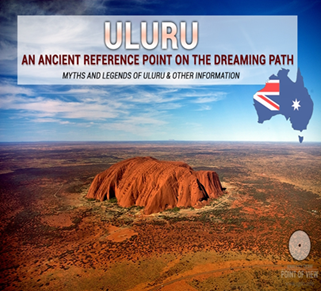
Uluru
The Rock carries serious spiritual significance to the local Anangu people, and cultural ceremonies have taken place at the rock for more than 10,000 years. But this legend concerns visitors, not the traditional landowners. The Anangu have reported that they’re inundated with packages loaded with rocks that tourists have pilfered from Uluru then sent back to their rightful home, because the souvenirs have supposedly cursed their lives.
CONCLUSION
There are controversial issues about what the country retains and what they set aside in their culture. If you bring in a high proportion of people from immigrant cultures, for example, that’s going to affect your core culture – there’s no doubt about it. And you have to manage that. The majority of the population speaks English as a first language. Australian English has a distinctive accent and vocabulary. Because people from about 200 countries around the world have migrated to Australia, there is a vast collection of languages spoken in the country. Other languages spoken in Australia include Mandarin, Italian, Arabic, Cantonese, and Greek. It is believed that at one time, there were almost 400 Australian Aboriginal languages, but now only 70 of these languages have survived, and all but 30 are endangered. Due to the huge blended of variety of culture we can find now at day.

 Título del sitio web